
K-drama drinking scenes look simple at first. A few green bottles of soju, grilled meat on the table, friends laughing too loudly, and someone finally confessing the truth they have been hiding for six episodes.
But if you look closer, those scenes are rarely just about alcohol.
They reveal hierarchy, friendship, romance, workplace pressure, heartbreak, and even character growth. That is why korean drinking culture soju moments appear so often in Korean dramas. They are emotional shortcuts, cultural lessons, and storytelling tools all at once.
Whether you are curious about kdrama drinking scenes, proper soju etiquette, or why everyone seems to eat hangover soup the next morning, this guide breaks it all down in a clear and fun way.
Why Soju Appears So Often in Korean Dramas
Soju is almost a character of its own in many K-dramas.
You see it during office dinners, breakup nights, family meals, convenience store heart-to-hearts, and awkward first dates. The reason is simple: soju is one of Korea’s most familiar alcoholic drinks, and it naturally fits into everyday social scenes.
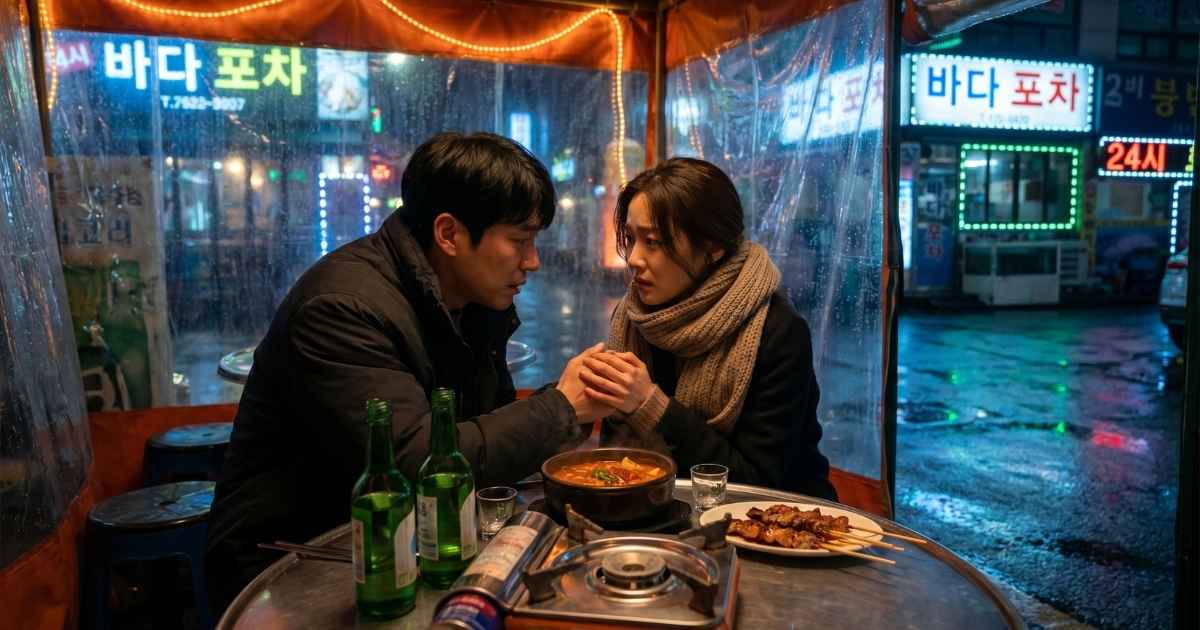
In dramas, soju often creates emotional honesty. A quiet character may finally speak their mind. A cold boss may reveal a softer side. Two enemies may become friends after one long night at a pojangmacha, the orange street tent restaurants often shown in Korean shows.
Soju as a Storytelling Device
Writers use drinking scenes to speed up emotional tension.
Instead of giving viewers a long explanation, a drama can show a character drinking alone after work. We immediately understand: they are lonely, stressed, rejected, or carrying something heavy.
A bottle of soju on the table can say what dialogue does not.
That is why kdrama drinking scenes feel so memorable. They are not random filler scenes. They often mark turning points in relationships.
The Real Meaning Behind K-Drama Drinking Scenes
Many viewers think drinking scenes are only there for comedy or romance.
Sometimes they are. A drunk confession, a piggyback ride, or a chaotic karaoke night can be funny and charming. But Korean dramas also use alcohol to show social rules that may not be obvious to international viewers.
In Korean culture, drinking can be connected to respect, bonding, and group identity. This is especially true in workplace dramas, where team dinners are common.
Drinking Shows Social Hierarchy
In many K-dramas, younger employees pour drinks for older colleagues or higher-ranking bosses.
This is not just politeness. It reflects Korea’s age-based and position-based etiquette system. The way a character holds a glass, pours soju, or turns away while drinking can tell you a lot about their personality.
A respectful character usually accepts a drink with both hands. A rebellious character might ignore the rules. A nervous rookie may overdo the politeness.
Small gestures matter.
Drinking Scenes Reveal Hidden Emotions
Alcohol scenes in dramas often make characters more vulnerable.
Someone may confess love. Someone may cry over a parent. Someone may finally admit they are jealous, afraid, or exhausted.
That is why soju scenes often feel intimate. The table becomes a confession room.
Soju Etiquette: What K-Dramas Are Really Showing You
If you have watched enough Korean dramas, you have probably noticed that characters do not simply pour and drink casually.
There are rules.
These rules are part of soju etiquette, especially when someone is drinking with older people, senior coworkers, or respected guests.
How to Pour Soju Properly
In formal or polite situations, you usually pour soju for others instead of pouring only for yourself.
When pouring for an elder or senior, it is respectful to hold the bottle with two hands, or use one hand to pour while the other hand supports your wrist or arm.
The gesture says, “I respect you.”
In K-dramas, this small action can reveal whether a character understands social expectations. A humble intern may do it carefully. A spoiled rich character may ignore it completely.
How to Receive a Drink
Receiving a drink also has rules.
A younger person or junior colleague often holds the glass with both hands when an older person pours for them. When drinking in front of someone senior, they may turn their head slightly away before taking a sip.
It is subtle, but once you notice it, K-drama drinking scenes become more interesting.
You start seeing the hidden language behind the scene.
Why Characters Refill Empty Glasses
In Korean drinking culture, an empty glass often invites a refill.
That is why friends keep pouring for each other during emotional conversations. It is not only about drinking more. It can also show care, attention, and closeness.
In a romantic drama, one character refilling another person’s glass can feel gentle and intimate. In a workplace drama, it can feel tense or obligatory.
Same action. Different meaning.
The Darker Side of Drinking Culture in K-Dramas
K-dramas often make drinking look warm, funny, and emotional.
But they also show the pressure that can come with it. Not every character wants to drink. Not every dinner is comfortable. Not every boss respects boundaries.
This is where dramas sometimes reflect real social tension.
Workplace Drinking Pressure
Office dinners, often called hoesik, appear in many workplace K-dramas.
These gatherings can help coworkers bond, but they can also create pressure. A junior employee may feel forced to drink because refusing a senior feels rude.
Some modern K-dramas challenge this old expectation. You may see younger characters refusing alcohol, setting boundaries, or criticizing toxic company culture.
That shift matters.
It shows how Korean society is changing, especially among younger generations who value personal choice and healthier work-life balance.
Drinking as an Escape
Some dramas use soju to show emotional pain.
A character drinks alone after a breakup. A struggling parent drinks after failing to provide for their family. A student drinks because the future feels impossible.
These scenes can be powerful, but they also remind us that alcohol is not always romantic.
The best dramas understand both sides. They show the warmth of shared drinks, but also the loneliness of drinking alone.
Hangover Soup: The Morning After in Korean Dramas
After the drinking scene comes the famous recovery scene.
This is where hangover soup appears.
In Korean, hangover soup is often called haejangguk. It is a hearty soup commonly eaten after a night of drinking. Depending on the region or restaurant, it may include ingredients like beef broth, bean sprouts, cabbage, dried pollack, pork spine, or blood sausage.
In dramas, hangover soup is more than food. It is comfort.
Why Hangover Soup Scenes Feel So Warm
When one character buys hangover soup for another, it can show care without saying “I care about you.”
A mother may cook it for her adult child. A friend may drag a hungover roommate to a small restaurant. A romantic lead may quietly place it on the table after pretending not to worry.
That is classic K-drama language.
The soup says what the character is too proud to say.
Food as Emotional Repair
Korean dramas often use food to heal emotional distance.
After a fight, characters eat together. After a breakup, someone cooks. After a night of drinking, hangover soup brings people back to normal life.
This is why food scenes in Korean dramas feel so comforting. They are not just about hunger. They are about reconnection.
What International Viewers Often Miss
If you are watching from outside Korea, it is easy to focus only on the romance or comedy.
But once you understand korean drinking culture soju, you see more layers.
You notice who pours first. You notice who drinks alone. You notice who refuses a drink, who accepts it, and who silently takes care of someone afterward.
These details can change how you understand a character.
Example: The Quiet Love Language
Imagine a drama scene where the female lead gets drunk after a difficult day.
The male lead does not confess his love. He does not make a grand speech. He simply makes sure she gets home safely, leaves hangover soup by her door, and pretends it was nothing.
That is not a small scene.
That is affection written in cultural gestures.
Example: The Power Move
Now imagine a young employee at a company dinner.
Her boss pressures her to drink, but she calmly places her glass down and says she has had enough. The room becomes quiet.
That moment may look simple, but it can signal confidence, generational change, and resistance against unhealthy workplace habits.
K-dramas are full of these small cultural codes.
How to Watch K-Drama Drinking Scenes More Deeply
The next time you see a soju scene, do not skip it.
Watch the body language. Who pours? Who receives? Who avoids eye contact? Who drinks too fast? Who orders food for everyone?
These details often reveal the emotional truth of the scene.
Pay Attention to the Setting
A convenience store drinking scene usually feels casual and youthful.
A pojangmacha scene feels intimate, nostalgic, and emotionally honest. A company dinner feels more formal and sometimes stressful. A home drinking scene can feel private, raw, and deeply personal.
The setting tells you how vulnerable the characters are allowed to be.
Notice Who Takes Care of Whom
In K-dramas, care often appears through action.
Someone takes away the bottle. Someone orders hangover soup. Someone carries a drunk friend home. Someone listens without judging.
These moments can reveal the strongest bonds in the story.
Final Thoughts: Soju Scenes Are Never Just About Drinking
Korean dramas use soju because it fits naturally into Korean social life, but also because it opens emotional doors.
Through drinking scenes, we see respect, pressure, friendship, heartbreak, romance, and healing. We learn how soju etiquette works, why hangover soup matters, and why kdrama drinking scenes often become the most unforgettable moments in a series.
So the next time a green bottle appears on screen, pay attention.
There may be a secret hidden between the glasses.
CTA: What is your favorite soju scene in a K-drama? Rewatch it and look closely at the gestures—you may notice a completely different story underneath.
FAQ About Korean Drinking Culture and Soju in K-Dramas
Why do Korean dramas show soju so often?
Korean dramas show soju often because it is closely connected to social life, work gatherings, friendships, romance, and emotional conversations. It is also a useful storytelling tool because characters often reveal hidden feelings during drinking scenes.
What is soju etiquette?
Soju etiquette refers to polite drinking manners in Korea. This can include pouring drinks for others, receiving a glass with both hands, and turning your head slightly when drinking in front of someone older or senior.
Why do K-drama characters turn away when drinking?
Characters often turn away when drinking in front of elders or higher-ranking people as a sign of respect. This gesture is common in formal or traditional drinking situations.
What is hangover soup in Korean dramas?
Hangover soup, or haejangguk, is a Korean soup often eaten after drinking alcohol. In K-dramas, it usually represents care, recovery, and emotional comfort.
Are K-drama drinking scenes realistic?
Some are realistic, especially scenes involving soju etiquette, workplace dinners, and late-night food culture. However, dramas often exaggerate certain moments for comedy, romance, or emotional effect.
Why do characters confess feelings when drunk?
Drunk confession scenes are common because alcohol lowers emotional barriers in storytelling. It allows characters to say things they are too afraid to admit when sober.
Is drinking required in Korean social culture?
No, drinking is not required. While drinking has been common in many social and workplace settings, modern attitudes are changing. Many people now choose not to drink or set clearer boundaries.